







The quality of a stuffed toy depends on more than the fabric and filling material. Behind every well-shaped plush product is a combination of pattern engineering, sewing knowledge, construction planning, and finishing skills.
Professional stuffed toy makers must understand how flat fabric components become a balanced three-dimensional object.
1. Pattern Engineering Creates the Product Structure
Pattern development is one of the most important stages in stuffed toy manufacturing.
The pattern maker divides the product into individual fabric components and determines how these pieces will connect.
For a simple animal plush, the pattern may include separate body, head, ear, arm, leg, and tail components.
More complex character designs may require additional sections to reproduce distinctive proportions and surface details.
2. Understanding Fabric Behavior
Different fabrics behave differently during cutting, sewing, and stuffing.
Some materials stretch more easily, while others have a directional pile or require special handling.
Experienced makers consider these characteristics when developing patterns and selecting construction methods.
This helps reduce distortion and maintain the intended product shape.
3. Sewing and Construction Techniques
Sewing determines how well the product holds its shape and how securely its components are connected.
Important considerations include seam placement, stitching consistency, turning openings, reinforced connections, and finishing methods.
Small design features may require more precise sewing arrangements to maintain the intended appearance.
4. Embroidery and Decorative Details
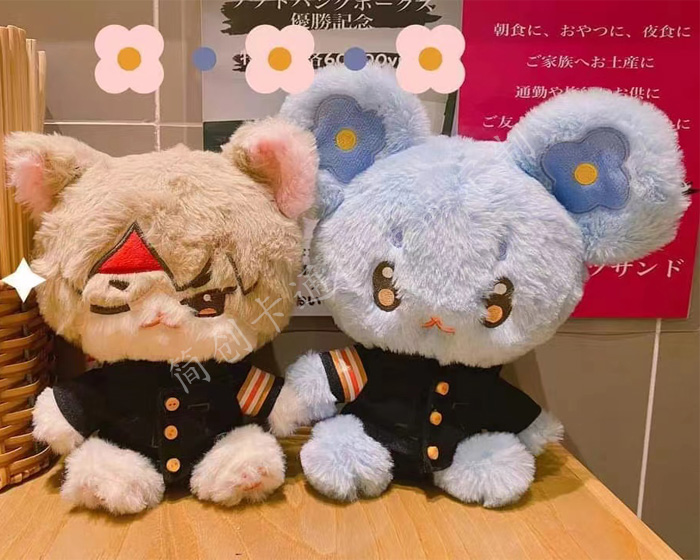
Facial expressions, logos, text, and small character features are often reproduced through embroidery or printing.
The choice depends on the artwork, fabric surface, size, and required visual effect.
Positioning should be confirmed during sample development because even a small change can affect the overall character expression.
5. Stuffing and Final Shaping
Stuffing influences the softness, volume, balance, and silhouette of a finished plush product.
Uneven filling can create visible irregularities, while excessive filling may distort the pattern or place unnecessary stress on seams.
The correct filling approach depends on the product's dimensions and intended appearance.
6. Why Skilled Makers Matter
Automated equipment can improve production efficiency, but many custom plush designs still require experienced workers to handle detailed construction and finishing.
A skilled production team can identify problems during development and make adjustments before they affect the full order.
Conclusion
Professional stuffed toy makers combine pattern development, fabric knowledge, sewing techniques, embroidery, stuffing, and quality inspection.
These skills are particularly valuable when producing custom characters, original IP merchandise, and products with complex three-dimensional structures.
Develop Your custom plush Project
Share your design and requirements with our team to discuss your custom plush manufacturing project.
Get a Quote